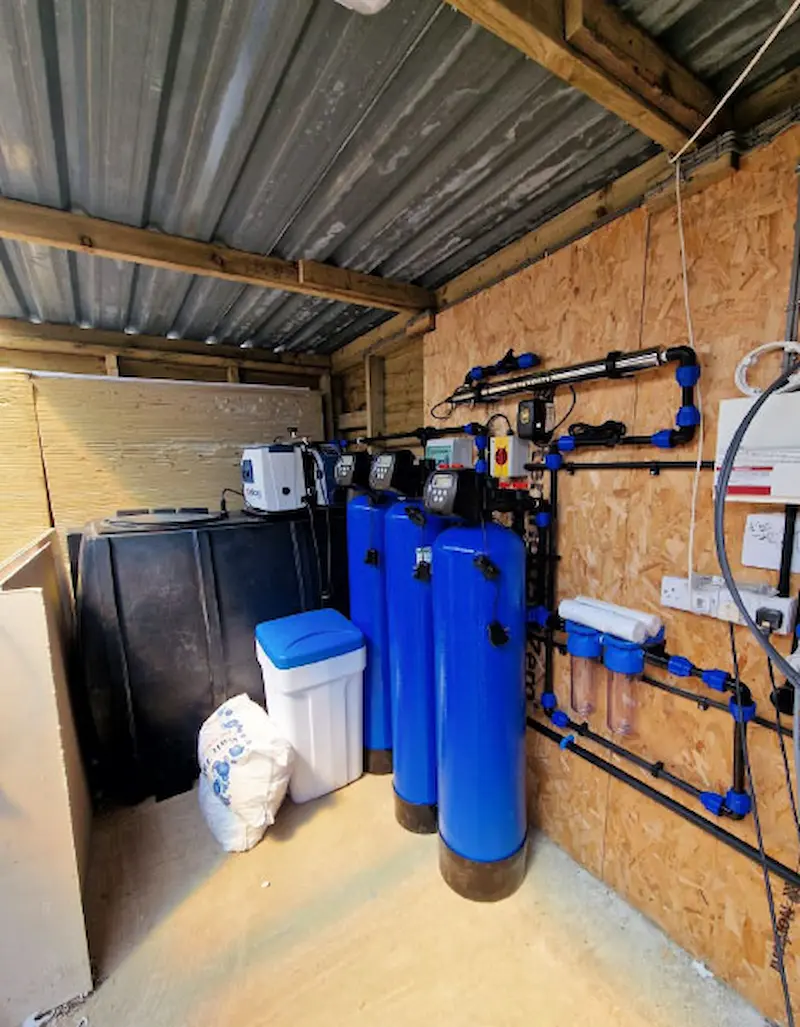
How to Treat Borehole Water for Different Uses

Groundwater from a borehole isn’t automatically suitable for every use. It can contain sediment, minerals, dissolved substances, or even microorganisms that affect its quality and usability. Before picking a borehole water treatment method, know what’s in the water and what you’ll use the water for. Then, decide which treatment technology is best. What Is Borehole…
Groundwater from a borehole isn’t automatically suitable for every use. It can contain sediment, minerals, dissolved substances, or even microorganisms that affect its quality and usability.
Before picking a borehole water treatment method, know what’s in the water and what you’ll use the water for. Then, decide which treatment technology is best.
What Is Borehole Water Treatment?
Borehole water treatment is the process of making borehole water suitable for its intended use by removing or reducing substances that affect its quality.
The treatment method depends on the problem in the water and can include filtration for sediment, softening for hardness, disinfection for microorganisms, or reverse osmosis for dissolved substances.
Why Borehole Water May Need Treatment
Borehole water can contain sediment, iron, manganese, hardness-causing minerals, dissolved salts, or microorganisms. Some affect the water’s appearance, taste, and smell, while others can affect its safety or cause problems such as scale, staining, or damage to plumbing and equipment. Testing the water identifies the specific problems that need treatment.
First, Test the Water
The water quality analysis identifies the substances present and their concentrations, so you know exactly what needs to be removed or controlled. Use these results and the water’s intended use to choose the right treatment method.
Borehole Water for Drinking and Cooking
If you plan to drink or cook with borehole water, have a qualified water laboratory test it for microbiological and chemical parameters before choosing a treatment system.
Treatment may include filtration to remove suspended particles, UV or chlorine disinfection to control microorganisms, or reverse osmosis to reduce dissolved salts and other substances. After treatment, test the water again to confirm it meets the required quality standards.
Borehole Water for Domestic Use
For bathing and laundry, reduce hardness, iron, and manganese to prevent scale, staining, and mineral deposits. For cleaning, sediment filtration removes sand and silt that can leave deposits on surfaces and enter appliances. If the water contains microorganisms, disinfect it before household use.
Borehole Water for Irrigation
For irrigation, test the water for salts, minerals, and other substances that can affect crops or irrigation equipment. High salt levels can build up in the soil and interfere with plant water uptake, while certain minerals can clog irrigation systems. Treat the water only when testing shows its quality is unsuitable for the crops or irrigation system you’re using.
Borehole Water for Livestock
The test should check for microorganisms, nitrates, sulfates, total dissolved solids, pH, and hardness. Use sediment filtration to remove sand and silt, disinfection to control harmful microorganisms, and reverse osmosis to reduce high levels of dissolved salts. Retest the water after treatment before giving it to the animals.
Common Borehole Water Treatment Methods
There are several ways to treat borehole water. These include:
- Sediment filtration
- Water softening
- Chlorination
- UV disinfection
- Reverse osmosis.
Sediment Filtration
A sediment filter removes sand, silt, clay, and other suspended particles from borehole water. Install one when testing shows the water contains these particles or when they cause cloudy water, blocked pipes, or clogged equipment. The filter traps the particles as water passes through it. Clean or replace the filter when accumulated sediment restricts water flow.
Water Softening
A water softener reduces calcium and magnesium, which are the minerals responsible for hard water. Soften borehole water when testing shows high hardness that causes scale on pipes, taps, water heaters, and other appliances. A softener passes the water through resin that exchanges calcium and magnesium ions for sodium or potassium ions.
Chlorination
Chlorination disinfects borehole water by adding a controlled amount of chlorine to kill or inactivate harmful microorganisms. It’s used when water testing identifies microbiological contamination or when a reliable residual disinfectant is needed throughout a water storage and distribution system. Too little chlorine may not provide adequate disinfection, while too much can affect taste and odor.
UV Disinfection
The UV borehole water treatment method uses ultraviolet light to inactivate microorganisms as water passes through a UV chamber. Use it for water that requires microbiological disinfection without adding chlorine. The water should be clear enough for the UV light to work properly, so you’d have to remove sediment and other particles first.
Reverse Osmosis
Reverse osmosis forces water through a semi-permeable membrane that reduces dissolved salts and many other dissolved substances. Turn to this method when testing shows high levels of dissolved solids or specific contaminants that ordinary filtration can’t remove. RO systems require pre-filtration and regular membrane maintenance to maintain performance.
Get Your Borehole Water Tested and Treated
If you need to make borehole water safe for drinking and cooking, bathing and laundry, livestock, or crop irrigation, Easy Drill Borehole Services can help identify the treatment your water needs and install the appropriate system. Contact us NOW to discuss your borehole water quality and treatment requirements.
